Ida Gamban | Brand World Creative | Adviro | Lead Water Testing | May 8, 2026
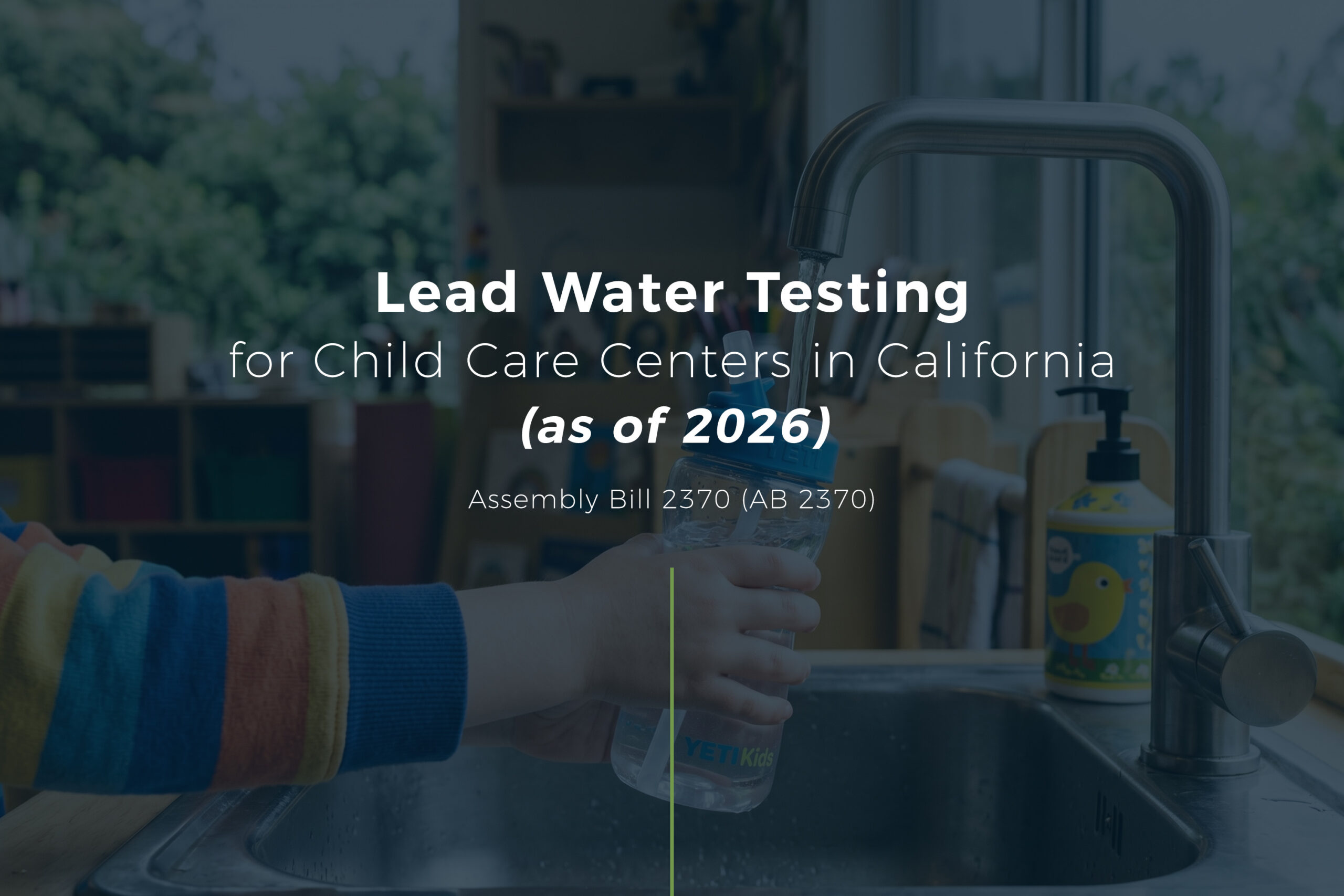
Lead Water Testing for Child Care Centers in California (as of 2026) – Assembly Bill 2370 (AB 2370)
Retesting Requirements, Compliance Updates & How to Prepare
Lead exposure continues to be one of the most serious environmental risks for young children. According to the Environmental Protection Agency, drinking water can contribute up to 20% of a child’s total exposure to lead—a neurotoxin that can affect brain development, learning ability, and behavior.
To protect children, California enacted Assembly Bill 2370 (AB 2370), requiring licensed Child Care Centers to test their drinking water for lead—and to continue to do so every 5 years.
While the initial compliance deadline passed in 2023, lead testing continues. Some centers are still performing their initial test, some are retesting (due to failed inspections), while others must do the routine sampling that is required every 5 years.
Important: These requirements apply to Licensed Child Care Centers only—not Family Child Care Homes.
What’s Changed (and What Hasn’t)
The core testing procedures remain largely the same, but enforcement and documentation expectations have increased. Today, most Child Care Centers fall into one of these categories:
- Previously tested and now due for retesting or follow-up
- Made plumbing or fixture updates requiring new sampling
- Preparing for licensing audits or compliance reviews
- Still needing to complete initial testing
If you’re in any of these groups, proper preparation is key to avoiding delays or failed compliance.
How to Prepare for Lead Water Testing in California
Preparing for testing doesn’t have to be complicated—but it does need to be done correctly. Below are the most important steps to ensure your facility is fully compliant.
1. Use a Certified Water Sampler (Required by Law)
All testing must be conducted by a Certified External Water Sampler working with a laboratory accredited under California’s Environmental Laboratory Accreditation Program (ELAP). This ensures:
- Results meet California regulatory standards
- Sampling follows approved procedures
- Your center avoids invalid or rejected test results
2. Schedule Testing During Normal Operations
Timing has a direct impact on accuracy. Testing should take place during regular operating conditions—not during holidays, closures, or extended breaks. When water systems sit unused for long periods, it can distort results and lead to unnecessary retesting.
3. Identify All Drinking Water Outlets
Before testing, your facility should review all locations where water is used for drinking or food preparation. Common outlets include:
- Drinking fountains and bubblers
- Kitchen and classroom faucets
- Bottle-filling stations
- Water coolers and outdoor drinking fixtures
If multiple outlets exist at a single sink, the most frequently used drinking source will typically be tested first.
4. Test Cold Water Only
California testing protocols focus exclusively on cold water outlets, since these are used for drinking and cooking.
- Two-handle fixtures → cold side only
- Single-handle fixtures → treated as cold-water use
Hot water is not included in compliance testing.
5. Follow the 8-Hour Stagnation Requirement
This is one of the most critical compliance steps. Water must remain unused for at least 8 hours prior to sampling to allow accurate detection of lead levels. During this time, avoid:
- Using sinks or faucets
- Cleaning with water
- Running irrigation or hoses
Even minimal water use can invalidate the test and require resampling.
What Happens After Lead Testing?
Once results are received, the next steps depend on the findings.
- Below action levels: Your facility is compliant.
- Above action levels: Corrective action is required (filters, fixture replacement, etc.), followed by retesting.
Today, regulators are placing greater emphasis on documentation and reporting, timely remediation, and proof of corrective action.
Missed the Original Deadline? You Can Still Comply
Many Child Care Centers across California are still completing their testing due to earlier delays. The key takeaway: It’s not too late—but waiting can create compliance risks. Scheduling your test now helps ensure you’re prepared for inspections and licensing requirements.
Why Child Care Centers Choose Adviro
At Adviro Environmental Consulting and Testing, we help Child Care Centers across California navigate lead testing with confidence. Our team provides:
- Certified External Water Sampling
- ELAP-compliant laboratory coordination
- Efficient scheduling with minimal disruption
- Clear, easy-to-understand reports
- Guidance on next steps if corrective action is needed
With experience testing hundreds of facilities, we understand how to keep your process smooth, accurate, and fully compliant.
Schedule Your Lead Water Testing Appointment
If your Child Care Center needs testing or retesting, now is the time to schedule.
📞 Call: (844) 607-9667
📧 Email: info@goadviro.com
Final Thought
Lead water testing is more than a requirement—it’s a responsibility to protect the children in your care. On a final note, staying compliant is straightforward when you have the right guidance and support.
Official Resources for Compliance
For more detailed program information, visit the California State Water Resources Control Board Lead in Drinking Water Testing Assistance Program for Child Care Centers.
FAQ: Lead Water Testing for Child Care Centers
When do Child Care Centers need to do routine sampling for lead?
Child Care Centers are required to perform routine sampling for lead every 5 years (or when they must meet follow-up requirements, have plumbing changes, or abide by compliance reviews).
Who can perform lead water testing in California?
Only Certified External Water Samplers working with ELAP-accredited laboratories.
What happens if lead is found in the water?
Corrective action must be taken, such as installing filters or replacing fixtures, followed by retesting.
Does this apply to home-based child care?
No. These requirements apply only to licensed Child Care Centers—not Family Child Care Homes.
How long does testing take?
Sampling is typically completed in a few hours, with lab results returned within several days depending on the lab.
Recent Comments